The best paint finishes for office walls, scuff-resistant paint for busy areas, choosing colors, painting at lease move-in or move-out, after-hours scheduling and what drives the cost.
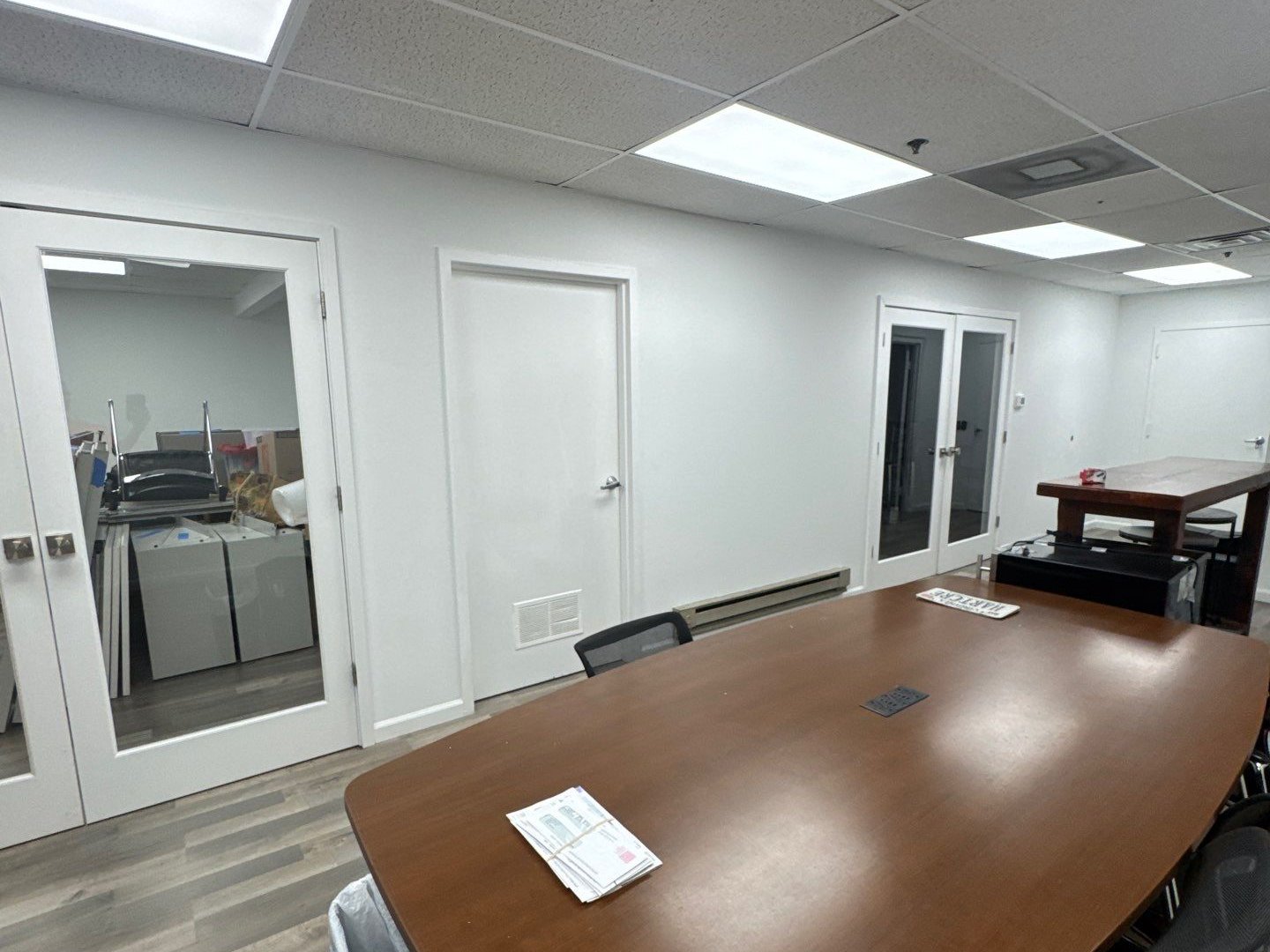

Most office repaints come down to a few decisions: which finish goes on which surface, which colors to use, when to schedule the work so nobody loses a day at their desk, and whether the repaint is tied to a lease move-in or move-out. Get those right and an office can be repainted over a few evenings or a weekend with low-odor paint, with walls that hold up to chairs, carts and cleaning for years.
This guide is for office managers, property managers and business owners in Northern Virginia planning to repaint an office suite, a full floor or a small professional office. It covers when to repaint, the best finishes and paints for each area, choosing colors, painting at lease turnover, scheduling around your staff, the prep that makes the paint last, and what drives the price.
There is no fixed schedule, because a busy corridor wears out much faster than a private office. The better approach is to repaint by area and by condition. Signs it is time:
Many offices repaint the high-traffic areas, such as the lobby, reception, corridors and break room, more often and leave private offices and conference rooms on a longer cycle. That spreads the cost and keeps the spaces clients see looking fresh.
A finish that is too flat marks easily and is hard to clean. A finish that is too glossy shows every dent and patch. For most offices:
Commercial lines make this easy to match across the whole office. Sherwin-Williams' ProMar 200 Zero VOC, a common commercial wall paint, comes in flat, low gloss eg-shel, low sheen eg-shel, eg-shel, semi-gloss and gloss, so ceilings, walls and doors can all come from one product line. For a deeper look at sheens, see our guide to eggshell vs. satin paint.
For the walls that get hit, use a commercial paint made for abrasion and scuff resistance rather than a standard wall paint. Sherwin-Williams' Scuff Tuff, for example, is a waterbased enamel made to resist scuffing and burnishing in high-traffic areas, even after frequent washing. A few other choices help these areas last:
Good office color schemes are usually simple: a light neutral on most walls, one or two brand or accent colors in places people notice, and a white or off-white ceiling.
Our article on paint colors that can improve your business has more ideas for customer-facing spaces.
That depends on your lease. Many commercial leases require the tenant to return the space in the condition it was delivered, "reasonable wear and tear excepted." The trouble is that the phrase is vague. A law firm's review of commercial lease disputes notes that "normal wear and tear" is one of the most commonly used and least understood phrases in a standard commercial lease, including on the question of whether a tenant has to repaint when it leaves.
A few practical points for each side:
We are painters, not lawyers, so if the lease language is unclear, ask your attorney or broker what it requires before the work is bid.
Most occupied offices are painted after hours or on weekends, a few rooms at a time. A good plan includes:
We cover this in more detail in our guide to painting an occupied office or commercial building.
Prep decides how good the finished walls look under bright office lighting:
It depends on the size, the condition of the walls and how many rooms can be done at once. As a rough guide, a small suite of a few offices and a conference room can often be finished over a weekend or a few evenings. A full floor is usually scheduled over one to several weeks of night or weekend shifts. Heavy drywall repair, color changes from dark to light and a lot of furniture moving add time. A good contractor will give you a written schedule by area before the work starts.
Office painting is usually priced by the square foot of wall area or as a fixed price per suite. The main things that move the price are:
For typical price ranges in the area, see our guide to commercial painting costs in Northern Virginia. If your property also has a warehouse or shop area, our warehouse painting guide covers those spaces.
A good office repaint uses the right finish for each area, a scuff-resistant paint where traffic is heavy, a simple color scheme with brand color where it counts, and zero-VOC paint applied after hours so work is not interrupted. If the repaint is tied to a lease, check what the lease requires before anyone picks colors, and keep a record of every color so future touch-ups match.
My Painter & Exteriors paints offices, professional suites and commercial interiors across Northern Virginia and DC, on nights and weekends when needed. See our commercial interior painting services, or request a free estimate and we will walk the space, help you choose finishes and give you a written schedule that works around your team.
The best paint finishes for office walls, scuff-resistant paint for busy areas, choosing colors, painting at lease move-in or move-out, after-hours scheduling and what drives the cost.

How warehouse ceilings, walls, steel and floors are painted: dryfall coatings, why a white ceiling improves lighting, OSHA marking rules, sprinkler and lead precautions, and phasing.

What a garage repaint includes, why light-colored ceilings and columns matter, ADA striping rules for accessible spaces, striping paint and timing, and how to phase the work.


