How warehouse ceilings, walls, steel and floors are painted: dryfall coatings, why a white ceiling improves lighting, OSHA marking rules, sprinkler and lead precautions, and phasing.
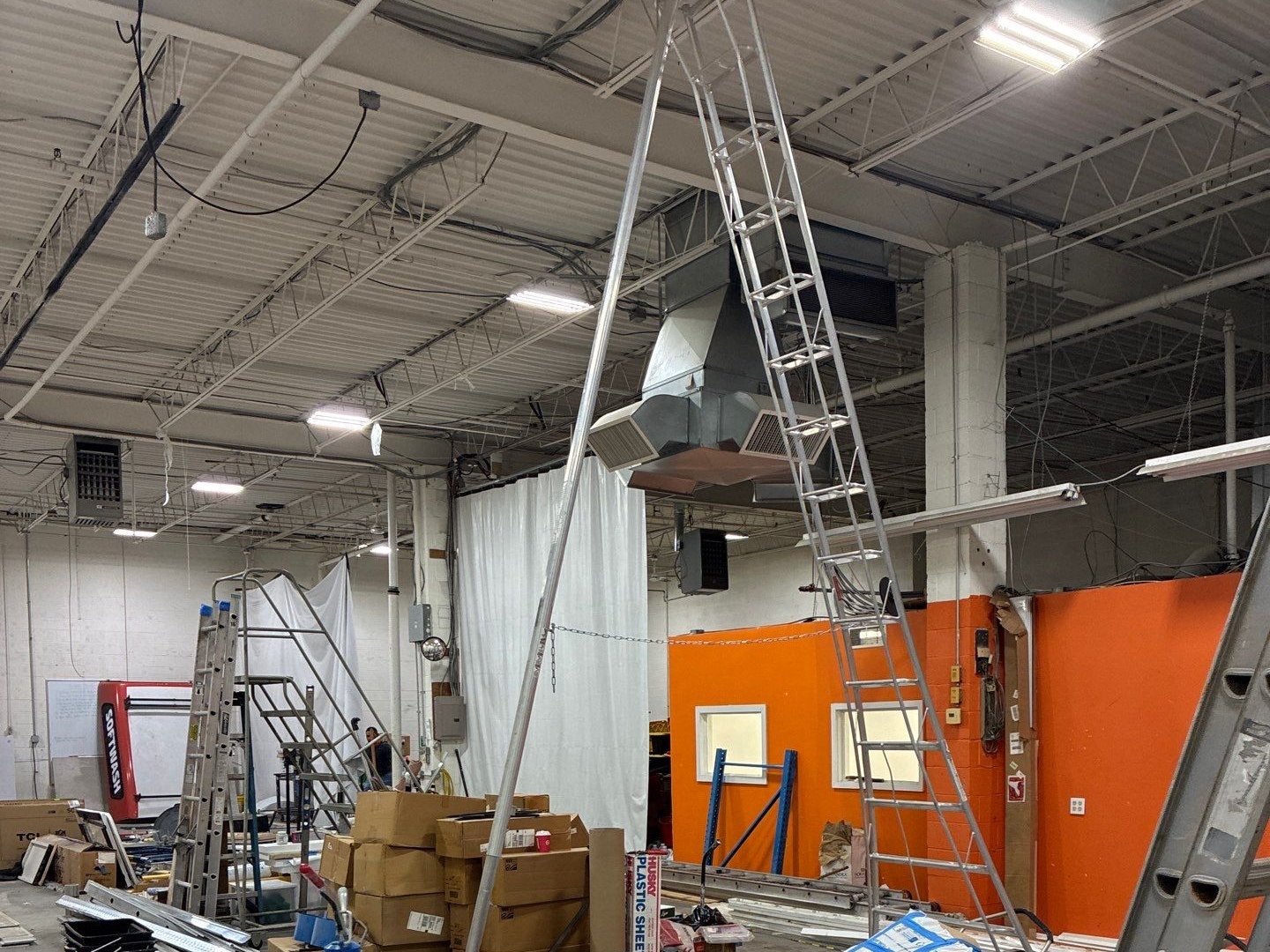

Warehouse painting usually covers four things: spraying the open ceiling, joists and ductwork with a dryfall coating, painting the walls with a tougher finish where forklifts and pallets hit them, coating steel columns, doors and rails with a rust-resistant direct-to-metal paint, and marking aisles and hazards on the floor. A white ceiling makes the building noticeably brighter, and most of the work can be done in sections so the warehouse keeps running.
This guide is for facility managers, property managers and business owners in Northern Virginia with a warehouse, distribution space, flex building or shop to repaint. It covers what the scope includes, what dryfall paint is and when it works, why ceiling color matters for lighting, which coatings go on walls and steel, the OSHA marking rules, the safety issues specific to warehouses, and how to plan the job around operations.
A typical warehouse scope covers:
Not every job includes all of it. A common first phase is just the ceiling and upper walls, because that is where the biggest visual and lighting change comes from.
Dryfall is a coating made to be sprayed overhead in occupied industrial spaces. The overspray dries in the air as it falls, so it lands on the floor, racking and equipment as a dust that can be swept or vacuumed up instead of wet paint. Sherwin-Williams describes its Waterborne Acrylic Dryfall as designed for airless spray application to interior ceilings and wall areas that are not subject to wear.
A few things to know about it:
Waterborne acrylic dryfalls are the usual choice in occupied buildings because they are low odor and clean up with water. Alkyd and epoxy-ester dryfalls exist for more demanding conditions but carry more odor.
The ceiling is the biggest reflective surface in a warehouse. Bare galvanized deck, rusted joists and dark insulation absorb a lot of the light your fixtures put out. A white coating sends more of it back down to the floor and the racking.
A warehouse safety guide from the Teamsters points out that white paint reflects about 80% of the light that strikes it, while concrete or wood may reflect only 20 to 40%. Some ceiling dryfalls are made specifically for this. One recent white dryfall for warehouses and gyms is rated at a light reflectance value of 92%.
In practice, a brighter ceiling helps in three ways:
Warehouse walls take more abuse than office walls, and the right coating depends on the surface:
For the lower 4 to 8 feet of walls in traffic areas, a harder finish pays for itself. A semi-gloss acrylic, a waterborne epoxy or an industrial enamel holds up to scuffs and frequent cleaning much better than a flat paint. Many facilities paint this band a darker color, so scuffs show less, and keep everything above it white for light.
Steel is where rust shows up first, especially near dock doors where cold air and moisture come in. The prep is what makes the paint last: loose rust and flaking paint are scraped or wire brushed off, bare spots are spot primed, and oily surfaces are degreased.
For the coating, contractors usually use a direct-to-metal (DTM) acrylic or a rust-inhibiting primer under an industrial enamel. Sherwin-Williams' Pro Industrial DTM Acrylic Primer/Finish, for example, is made for bar joists, structural steel, steel deck ceilings, piping and tanks. Columns, bollards and guardrails that get hit by equipment are often painted safety yellow so they are easy to see.
OSHA's materials handling standard says that where mechanical handling equipment is used, permanent aisles and passageways shall be appropriately marked. OSHA does not require one specific method or color for aisle lines. Its long-standing interpretation is that "appropriately marked" is not meant to restrict the marking to one method only, so painted lines, floor tape and other clear markings can all work.
OSHA does set colors for certain hazards. Under its safety color code, red identifies fire protection equipment, danger and emergency stops, and yellow marks caution and physical hazards such as tripping, striking and falling hazards. Many facilities follow a broader color scheme for things like walkways and storage areas, but the important thing is to use one scheme consistently and keep the lines visible.
Painted lines last longer on a sealed or coated floor than on bare, dusty concrete. If your floor is worn, stained or dusting, our guide to commercial epoxy flooring covers coating the whole floor, and the markings can be added on top.
Overhead painting in a warehouse means working around a lot of equipment, and some of it has strict rules:
Often, yes. Lead-based paint was common on industrial steel and in buildings painted before 1978, and many warehouses in the region are older than that. OSHA's lead in construction standard applies to construction work where workers may be exposed to lead, and construction is defined to include alteration and repair, including painting and decorating. Scraping, sanding and power tool cleaning of lead paint are the kinds of tasks the standard treats as higher exposure.
If the building is old or the existing coatings are unknown, have the paint tested before prep starts. If lead is present, the prep methods, protection and cleanup change, and that needs to be in the bid. Paint applied over sound lead paint without disturbing it is a different situation from scraping it off.
Most warehouses cannot shut down, so the work is planned in zones:
Our guide to painting an occupied commercial building covers notices and phasing in more detail.
Warehouse painting is usually priced per square foot of ceiling and wall area. Because dryfall is sprayed and the areas are large and open, the per-square-foot price on ceilings can be lower than on office walls, even though the job needs lifts. The biggest cost drivers are:
For broader pricing, see our commercial painting cost guide for Northern Virginia. If you are getting several bids, our guide on how to choose a commercial painting contractor explains what each bid should include.
A warehouse repaint works best when each surface gets the coating made for it: dryfall on high ceilings, a tough finish on walls where equipment hits, rust-resistant paint on steel and clear, consistent markings on the floor. Protect sprinklers and inventory, test older buildings for lead before anyone scrapes, and plan the work in zones so the building keeps running.
My Painter & Exteriors paints warehouses, flex spaces, shops and commercial interiors across Northern Virginia and DC. See our commercial interior painting and epoxy floor services, or request a free estimate and we will walk the building with you and give you a written, phased plan.
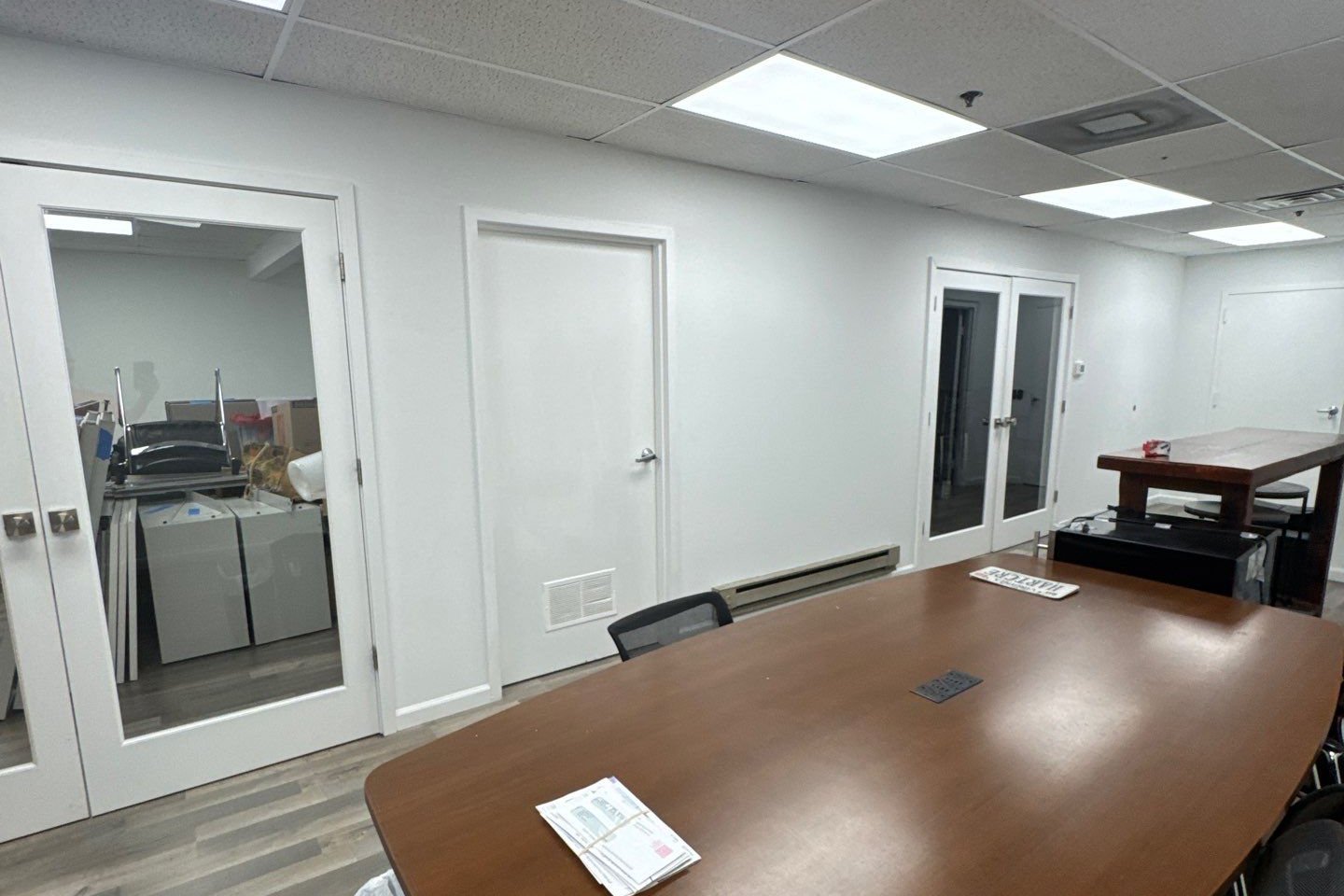
The best paint finishes for office walls, scuff-resistant paint for busy areas, choosing colors, painting at lease move-in or move-out, after-hours scheduling and what drives the cost.
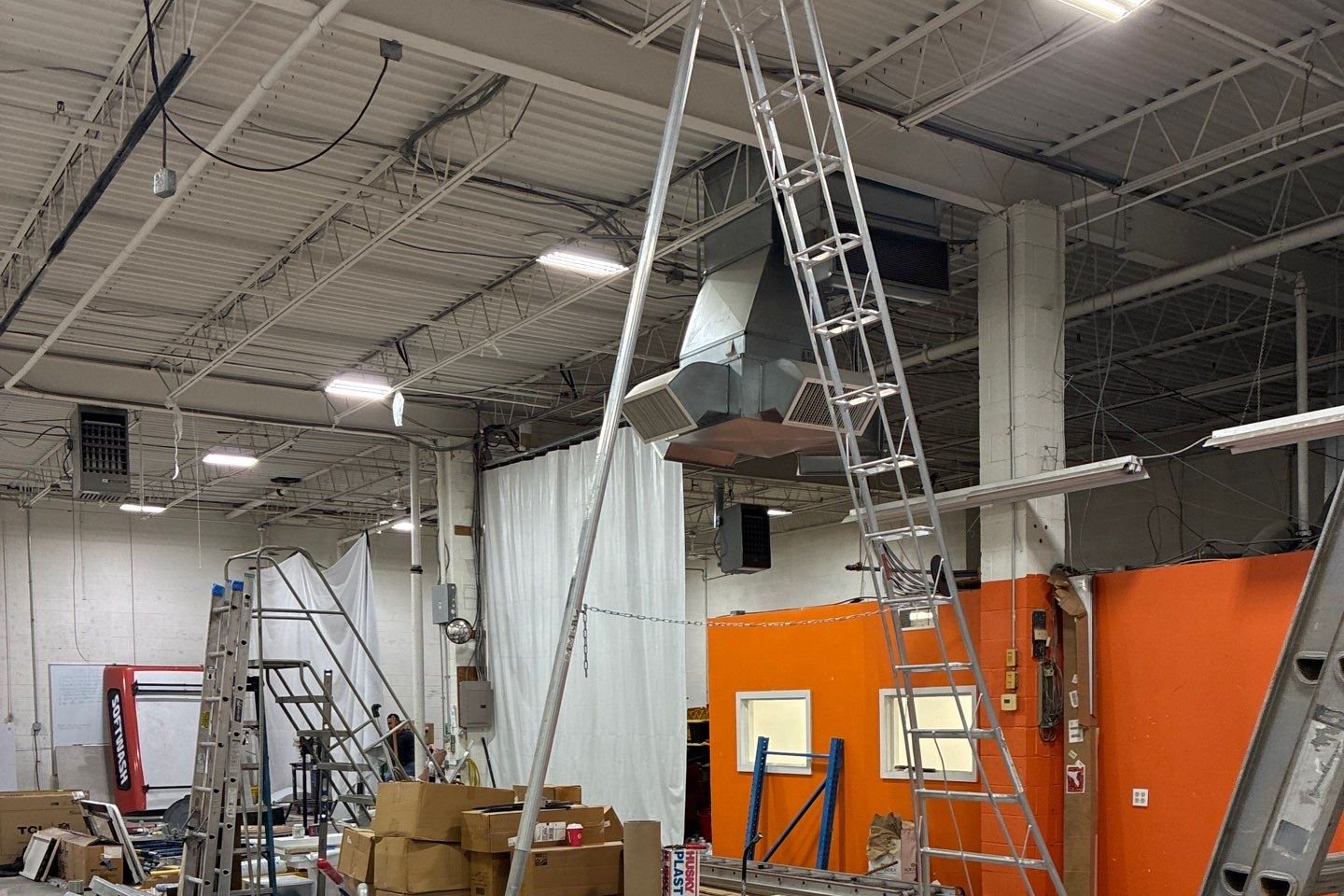
How warehouse ceilings, walls, steel and floors are painted: dryfall coatings, why a white ceiling improves lighting, OSHA marking rules, sprinkler and lead precautions, and phasing.

What a garage repaint includes, why light-colored ceilings and columns matter, ADA striping rules for accessible spaces, striping paint and timing, and how to phase the work.


