What commercial epoxy flooring costs per square foot, which coating fits a warehouse, showroom or kitchen, and the prep, moisture testing and cure times that decide how long it lasts.
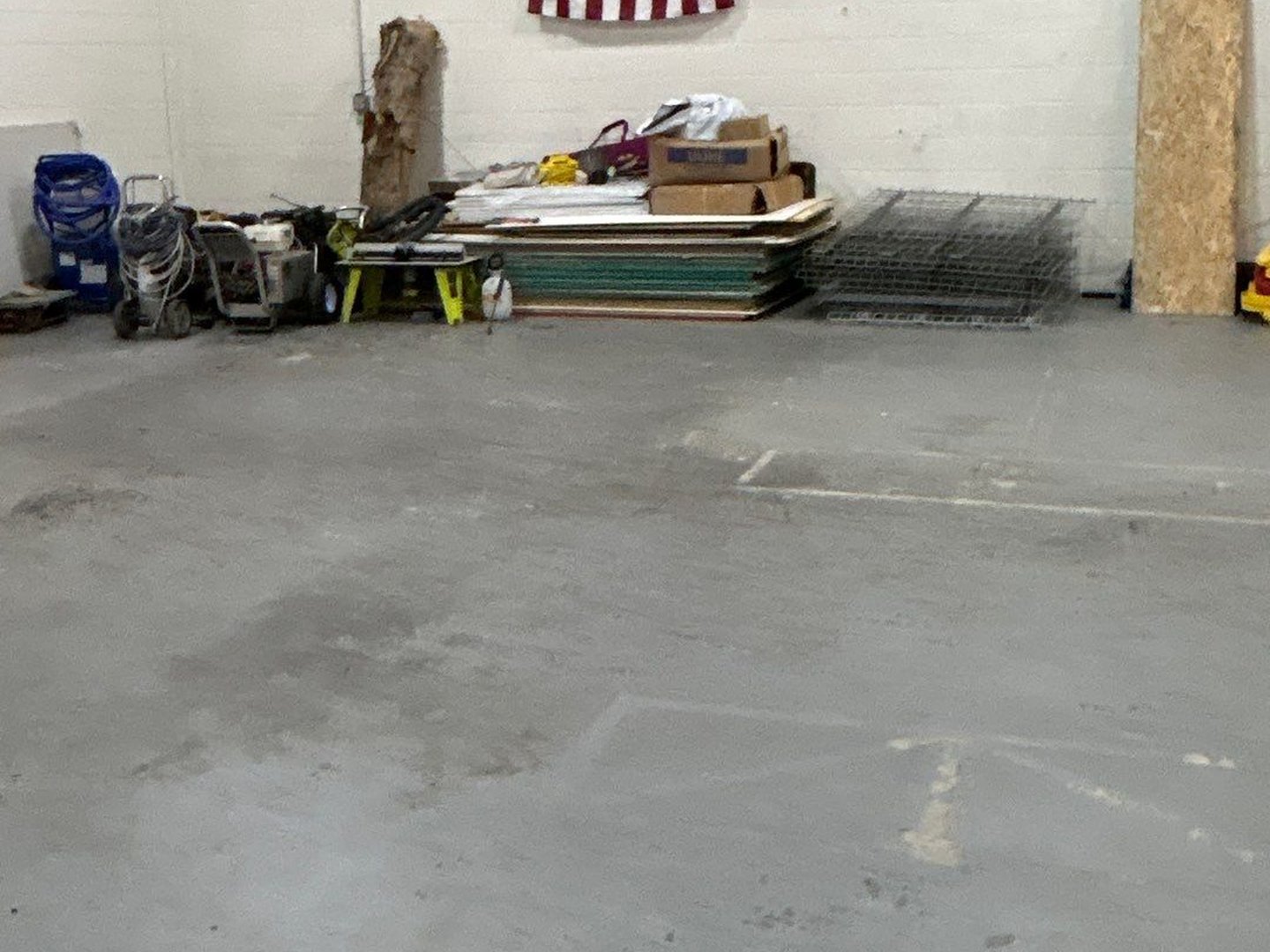

Commercial epoxy flooring typically costs about $3 to $12 per square foot installed, and more for decorative, quartz or heavy industrial systems. Where your floor lands in that range depends mostly on the condition of the concrete, how much grinding or shot blasting it needs, whether the slab has a moisture problem, and which coating system the space actually calls for. Done right, a commercial epoxy floor is tough, easy to clean and lasts for years. Done over poor prep or a damp slab, it can peel within months.
This guide is written for property managers, facility managers and business owners in Northern Virginia who are pricing a coated floor for a warehouse, shop, back-of-house area, mechanical room or showroom. It covers what drives the cost, the main coating types, the prep and moisture testing that decide whether the floor lasts, and how long the space will be out of service.
Epoxy is a two-part resin that bonds to prepared concrete and cures into a hard, seamless surface. A commercial system is usually several layers: a primer that soaks into the concrete, one or more body coats that build thickness, and often a topcoat chosen for wear, chemical or UV resistance. Color flakes or quartz can be broadcast into the wet coating for texture and slip resistance.
The result is very different from a single coat of "epoxy paint" from a hardware store. Commercial systems are thicker, use higher-solids materials and depend on mechanical surface prep, which is why they hold up to carts, pallet jacks, foot traffic and spills.
For professional installation, This Old House puts epoxy flooring at $3 to $12 per square foot, including materials and labor. As a rough planning number, that works out to about $15,000 to $60,000 for a 5,000 square foot floor. Commercial projects tend to sit in the middle and upper part of that range because they use thicker systems and more aggressive prep than a typical home garage.
Some specialty systems cost more than that range:
Homeowners pricing a garage can see residential numbers in our guide to what an epoxy garage floor costs.
Parking decks are a separate category. A garage deck usually needs a traffic-bearing waterproofing membrane rather than a standard epoxy floor, which we cover in our parking garage painting and striping guide.
Coatings fail at the bond, not in the middle of the film. The concrete has to be clean, sound and roughened to the right texture so the primer can grip it. The industry describes that texture with a Concrete Surface Profile (CSP) number from the International Concrete Repair Institute. Sika's surface preparation guide calls shot blasting the industry standard for preparing concrete and explains how ICRI Guideline 310.2 defines those profiles.
In practice, good prep looks like this:
Ask every bidder how they will prepare the floor, and to what profile. A bid that says "clean and coat" is the one most likely to peel.
Yes, especially on slabs on grade, basements and newer concrete. Moisture moving up through the slab is one of the most common reasons coated floors blister and delaminate. Two tests are standard: the calcium chloride test (ASTM F1869), which measures how much water vapor comes out of the surface, and the in-situ relative humidity test (ASTM F2170), which measures humidity inside the slab with probes.
Coating manufacturers publish their own limits, but Tnemec notes that as a general rule, moisture vapor should not exceed 3 pounds per 1,000 square feet per 24 hours, or 75 to 80 percent relative humidity, for most conventional floor primers. If a slab tests higher, a moisture-mitigating primer goes down first. It adds cost, but far less than tearing out a failed floor.
Plan on a few days for most commercial floors: a day or more of prep and repairs, then coats with cure time between them, then a waiting period before full use. Cure times depend on the product and the temperature. As one example, Sika's data for its Sikafloor-264 FS epoxy lists about 6 hours to foot traffic, 18 hours to light traffic and 7 days to full cure at 68°F, and longer in a cold space.
A few ways to keep the business running:
Our guide to working in an occupied commercial building covers notices, phasing and odor control in more detail.
A smooth, glossy epoxy can be slippery when wet or oily, so slip resistance has to be designed in. Crews add aggregate to the topcoat or broadcast quartz or flake into the system, with more texture where floors get wet. This matters for compliance as well as comfort. OSHA's walking-working surfaces rule requires employers to keep workroom floors clean and, to the extent feasible, dry, and to inspect walking-working surfaces regularly and keep them in a safe condition.
Tell your contractor how the floor will be cleaned and where it gets wet, so the texture matches the use. Too much grit is hard to mop, and too little is a fall risk.
A thick, well-prepared system in a light or moderate traffic area can last many years before it needs more than cleaning and spot repair. Heavy forklift lanes, dragging steel, hot liquids and harsh chemicals shorten that, and a thin coat over poor prep may wear through in a year or two. The usual pattern on a good floor is a fresh topcoat every several years in the high-traffic zones, not a full replacement.
To get the most out of it:
Most commercial epoxy floors land between $3 and $12 per square foot installed. The coating system should match the use, from 100% solids epoxy in a warehouse to urethane cement in a kitchen. Prep and moisture testing decide whether the floor lasts, so insist on both in writing, and plan the schedule around cure times so the space reopens on a floor that is actually ready.
My Painter & Exteriors installs commercial epoxy floor coatings for warehouses, shops, offices, schools and other commercial properties across Northern Virginia and DC. See our commercial epoxy floor services, or request a free estimate and we will look at your concrete, recommend the right system and give you a written scope with the prep spelled out.

What a garage repaint includes, why light-colored ceilings and columns matter, ADA striping rules for accessible spaces, striping paint and timing, and how to phase the work.

What commercial epoxy flooring costs per square foot, which coating fits a warehouse, showroom or kitchen, and the prep, moisture testing and cure times that decide how long it lasts.

How often to repaint a commercial exterior, which coatings suit masonry, metal and wood, the best season in Northern Virginia, and what good prep looks like.


