Can you paint a commercial building in winter? Minimum paint temperatures, why dew point matters, Northern Virginia winter weather, which jobs fit the season and how to plan.


Yes, commercial painting can be done in winter in Northern Virginia. Interior work goes on all year in heated buildings, and many modern exterior paints can be applied when the air and surface are as low as 35°F. The real limits are surface temperature, dew point, how cold it gets overnight and how long the paint needs to cure. Planned around those, winter is often the easiest time to get on a contractor's schedule.
This guide is for property managers, facility managers, HOA boards and business owners deciding whether to paint between December and March. It covers what work fits the season, the temperature and moisture rules that matter, which coatings handle cold, how heating and ventilation change indoor work, and how to plan a winter project so it lasts.
Yes, with the right work in the right conditions. A heated office, lobby, stairwell, corridor or retail space can be painted in January the same way it is painted in June. Exterior work is more limited, but it is not off the table. A mild stretch of 45 to 55°F days, a low-temperature paint and a crew that watches the surface temperature and the forecast can get doors, trim, railings, signage areas and smaller elevations done.
What does not work is pushing ahead on a cold, damp day and hoping for the best. Latex paint forms a film as its particles fuse together while the water evaporates. Sherwin-Williams explains that when latex is applied below the manufacturer's recommended temperature, or is hit by cold and moisture too soon, it doesn't form a proper film. The result can look fine for a few weeks and then show up as streaking, poor adhesion or early peeling.
It depends on the product, and the number on the label refers to the air, the surface and the paint itself, not just the forecast high.
Two practical points. First, the surface can be much colder than the air. North-facing walls, metal, and masonry that sat in the shade overnight can stay below the air temperature well into the afternoon, so crews check the surface with an infrared thermometer rather than relying on a weather app. Second, the temperature has to hold while the paint cures, not just while it goes on. A 50°F afternoon followed by a 25°F night is a bad day to paint.
The dew point is the temperature at which moisture in the air condenses on a surface. If a wall is at or near the dew point, a thin film of water forms on it, often invisibly, and paint applied over it or curing on it can blister, lose adhesion or develop surfactant streaks.
The industry rule is simple: the surface should be at least 5°F above the dew point. Sherwin-Williams states that no coatings should be applied unless the surface temperature is a minimum of 5°F above the dew point. Its exterior FAQ adds that, ideally, the temperature should stay in range and above the dew point for at least 48 hours after application.
In winter this is what usually ends the painting day. As the sun drops in late afternoon, surfaces cool quickly and the gap to the dew point closes. That is why winter exterior work tends to run in a short window, roughly from late morning, once frost and dew have burned off, to midafternoon, leaving the coating time to set before evening.
Colder than it feels on a sunny day, but milder than most of the Northeast. At Washington Dulles International Airport, the cold season runs from about December 1 to March 4, with average daily highs below 51°F. January is the coldest month, averaging a high of 42°F and a low of 26°F. Arlington, Alexandria and the areas closer to DC run a few degrees warmer than Dulles.
What that means for planning:
Large exterior repaints, such as a full building, a parking structure or an HOA community, are usually best scheduled for spring through fall. Our commercial exterior painting guide covers how to plan that kind of project. Winter is the right time to get the walkthrough, bids and color decisions done so the work can start as soon as the weather allows.
Most interior work, plus targeted exterior work on mild days:
Inside a heated building the temperature is rarely the problem. Air flow and humidity are.
For exterior surfaces, the main choice is a premium 100% acrylic rated for low temperatures. These products are designed to form a film at 35°F and to resist early rain and dew better than standard paint. A few other points:
For a sense of pricing, our commercial painting cost guide for Northern Virginia covers the main cost drivers, which are the same in any season.
Winter does not stop commercial painting in Northern Virginia. It changes what gets painted and when. Interior work in heated buildings can go ahead all season, and exterior doors, trim and railings can be done on mild days with low-temperature paint, as long as the surface stays above the product's minimum and at least 5°F above the dew point while the coating cures. Use the cold months for interiors and planning, and the larger exterior work can start the moment spring arrives.
My Painter & Exteriors paints offices, lobbies, common areas and commercial buildings across Northern Virginia and DC year-round. See our commercial interior painting and commercial exterior painting services, or request a free estimate and we will help you decide what to do this winter and what to schedule for spring.

How to paint a metal building, metal panels, roof, doors and railings: chalk and rust removal, why paint peels off galvanized steel, which primer and paint to use, and cost drivers.

Can you paint a commercial building in winter? Minimum paint temperatures, why dew point matters, Northern Virginia winter weather, which jobs fit the season and how to plan.
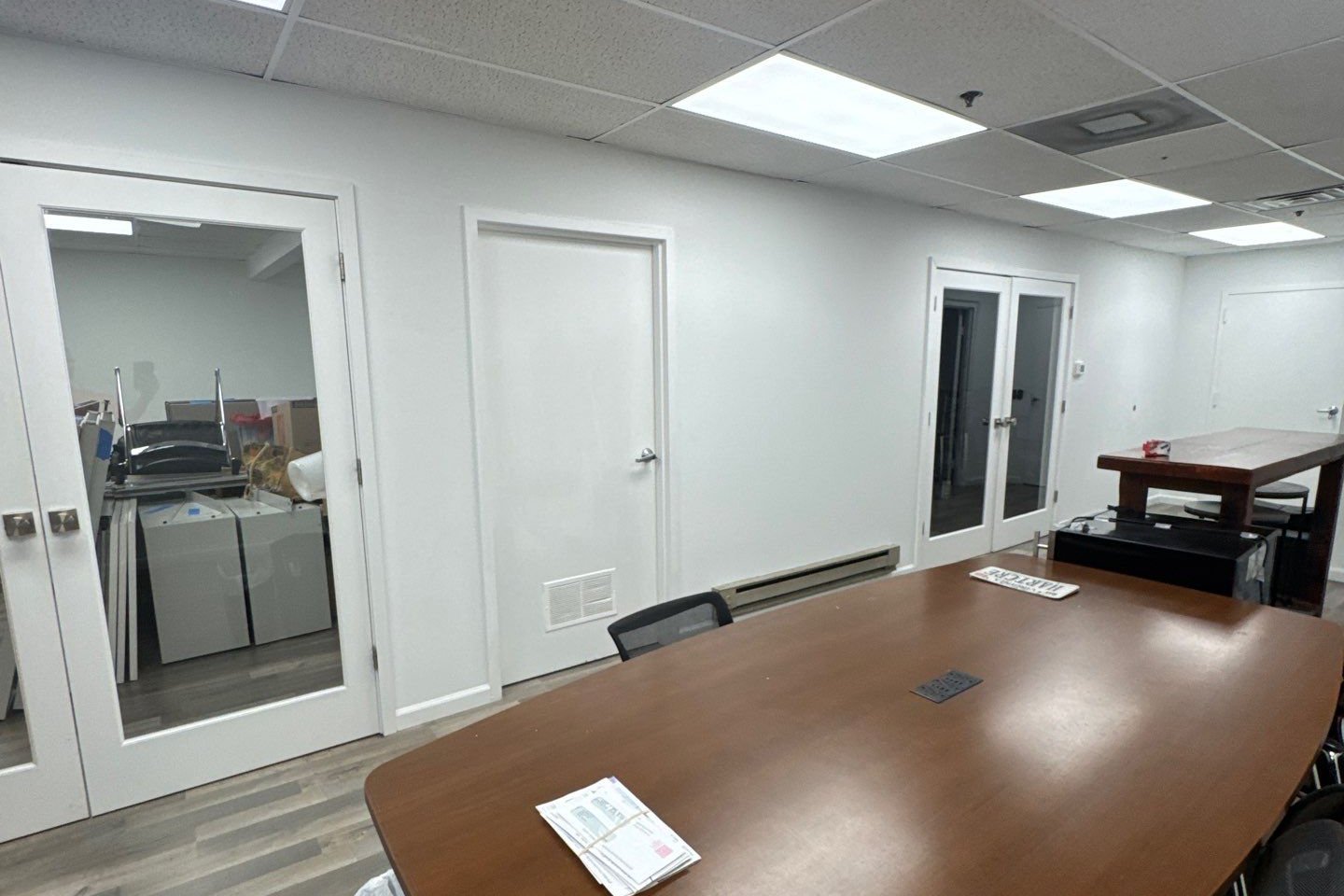
The best paint finishes for office walls, scuff-resistant paint for busy areas, choosing colors, painting at lease move-in or move-out, after-hours scheduling and what drives the cost.


