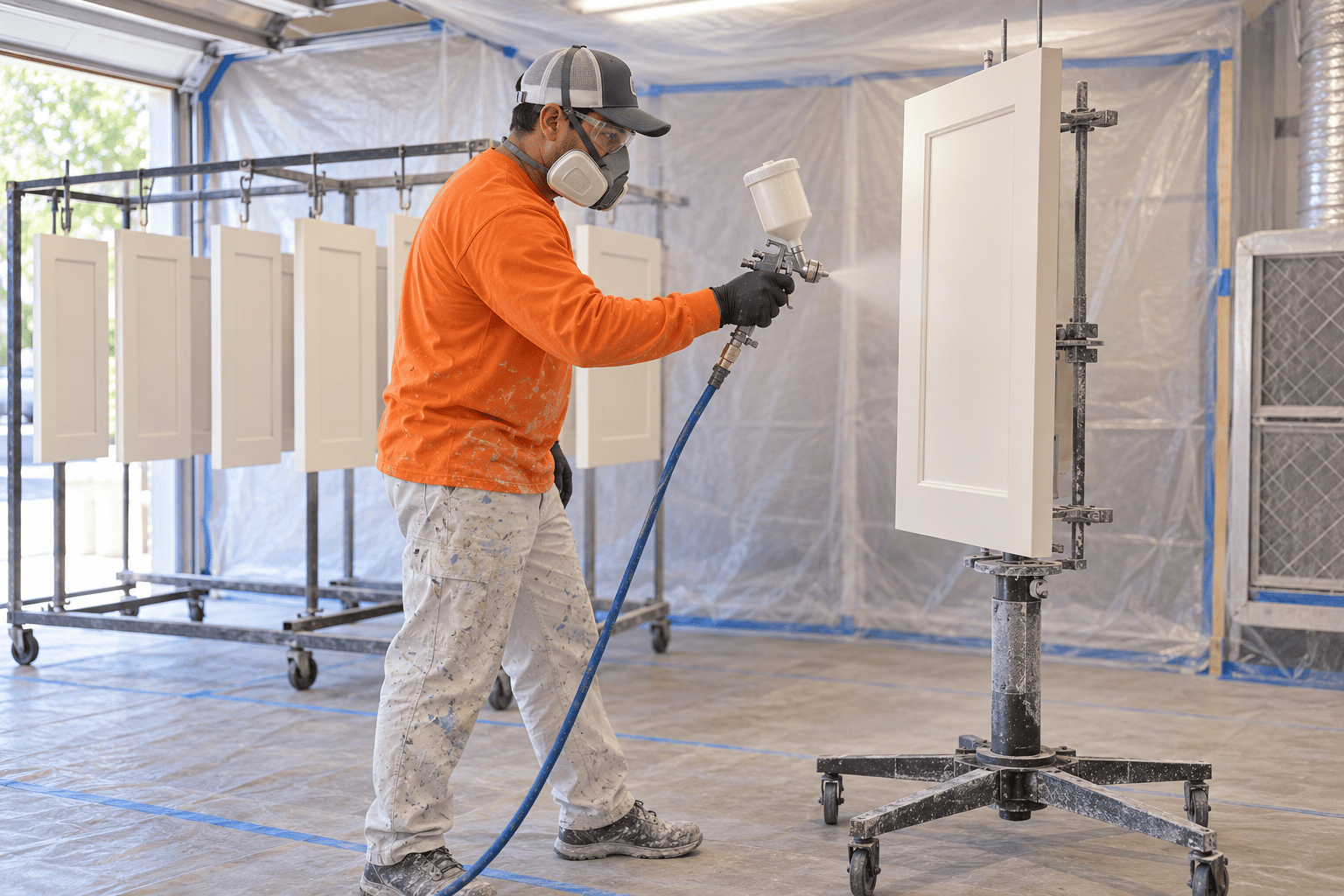
How much paint do you need? Most single rooms take one to two gallons, and the exact amount comes down to your wall square footage and how many coats you plan to roll on.
Figuring out how much paint you need starts with simple math. Measure the walls, subtract the doors and windows, then match that number to what a can actually covers. Get it right and you finish in one trip. Get it wrong and you are either back at the store mid-project or stuck with half-used cans hardening in the garage.
This room-by-room guide gives you the coverage numbers, the formula, and straight answers to the questions homeowners ask most, whether you are refreshing a bedroom or planning a full interior house painting project.
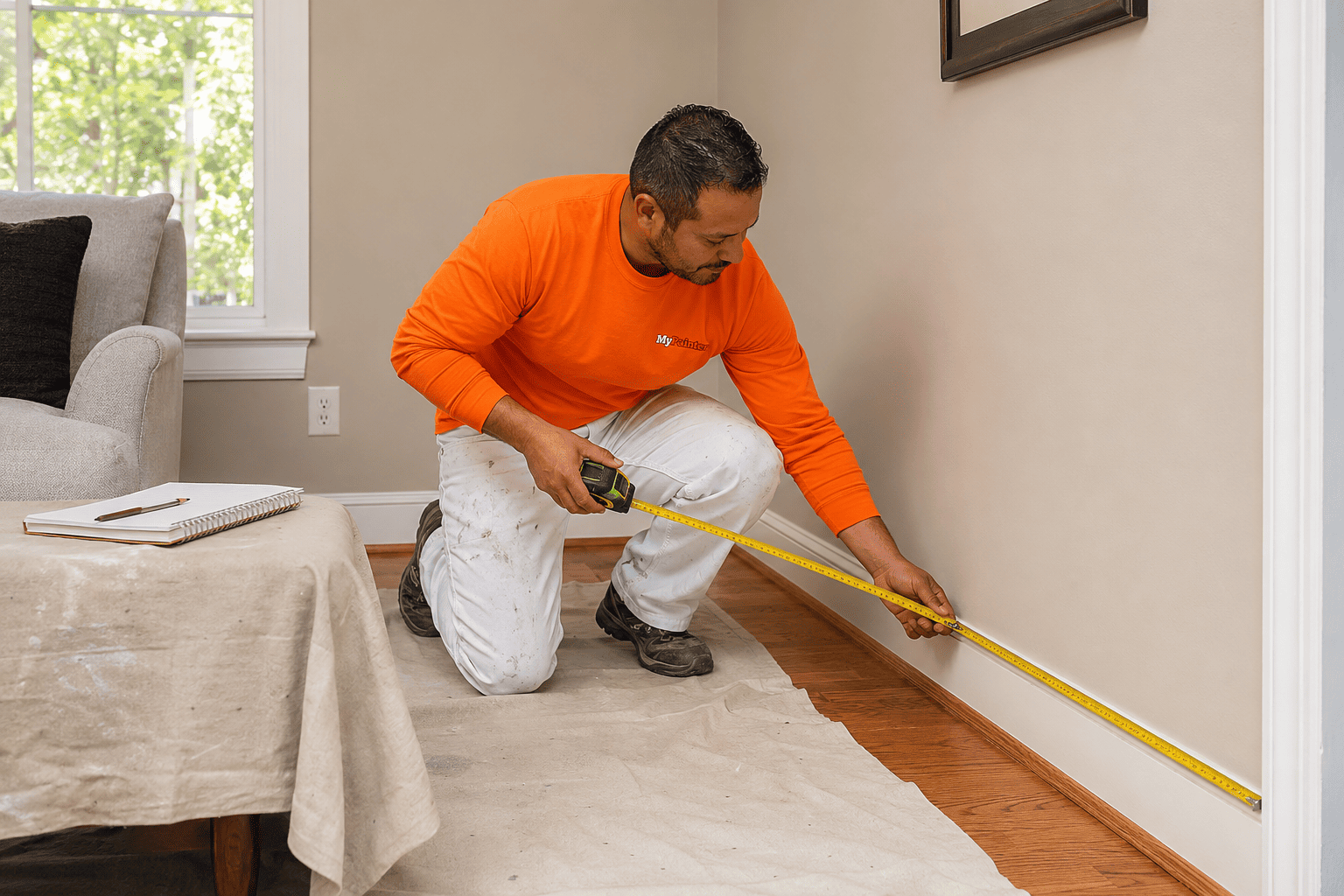
A 5-gallon bucket of paint covers about 1,750 to 2,000 square feet with one coat, or roughly 800 to 1,000 square feet if you plan on two coats. That is enough for the walls of several average rooms, an open floor plan, or a stairwell and hallway run in one pour.
The range exists because coverage depends on the surface. Smooth, primed drywall soaks up less paint, so you land near the top of the range. Rough or textured walls, bare drywall, and deep colors pull the number down.
One gallon covers about 350 to 400 square feet, so a full bucket is simply five of those stacked together. If your project totals more than about 1,600 square feet of wall, a bucket usually makes sense. For a single bedroom, it is overkill.
Use this quick reference to match the container to the job.
Yes, one gallon covers a 12-by-12 room for a single coat, but plan on two gallons if you want two coats, which most jobs need.
Here is the math. A 12-by-12 room with 8-foot ceilings has 48 feet of wall around the perimeter. Multiply that by the 8-foot height and you get 384 square feet of wall. Subtract about 40 square feet for a standard door and window and you land near 344 square feet.
Sherwin-Williams rates one gallon at 350 to 400 square feet, so a single gallon just covers that in one coat.
The catch is the second coat. Fresh drywall, a big color change, or going from dark to light almost always needs two coats, and that second pass is where the first gallon runs dry. Buy two gallons, and keep the leftover sealed for touch-ups.
Picking the right sheen matters here too, since flat and eggshell hide more with one coat than a high-gloss does. Our color and sheen selection guide walks through which finish fits each room.
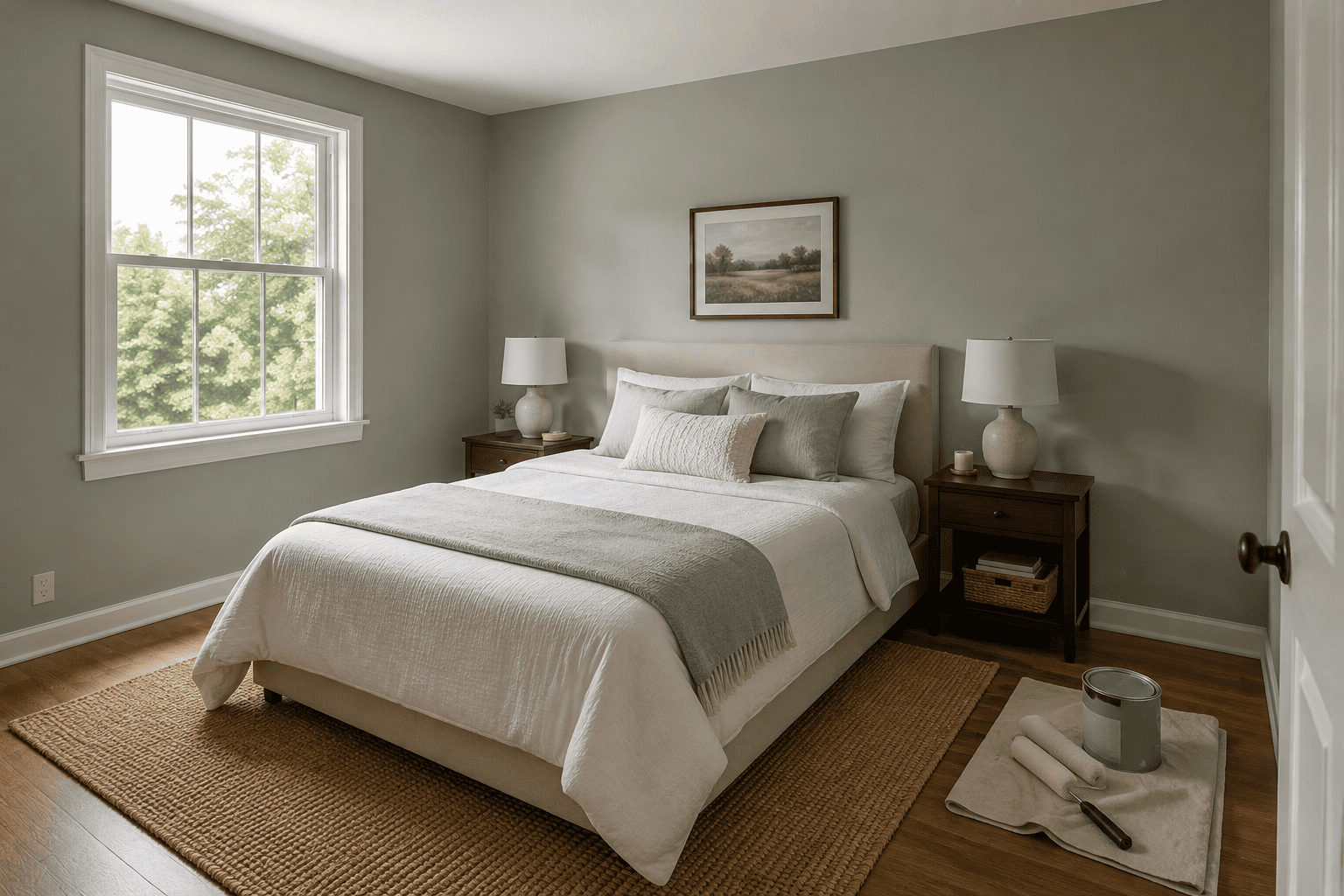
No, a single quart will not cover the walls of a small room, but it is the right size for an accent wall, trim, or a few doors. A quart covers about 100 square feet with one coat on a primed surface.
Even a small 8-by-10 bedroom has close to 288 square feet of wall before you subtract openings, so the walls alone need more than a gallon once you add a second coat. A quart falls far short there.
Where a quart earns its place is smaller work. One quart handles an accent wall, the trim and baseboards in a modest room, or two to three interior doors. If you are repainting a full room, skip the quart and buy by the gallon.
An 8-ounce paint sample covers roughly 16 square feet, which is about a 4-foot-by-4-foot patch of wall. Behr rates its 8-ounce samples at up to 16 square feet, and other sample pots land in the same 16 to 20 square foot range.
That is enough to test a color in real light before you commit, and testing is exactly what a sample is for. It is not enough to coat a wall, and some brands leave the performance ingredients out of their sample pots, so they are for trying colors, not for the finished job.
Brush a sample on two or three walls, live with it for a day, and watch how it shifts from morning to evening. Older Northern Virginia homes in Arlington and Fairfax often sit under heavy tree cover, so a color that looks warm at noon can turn gray and flat by 5 p.m.
Image: comparing-interior-paint-color-samples.png
Alt text: How far does 8 oz of paint go color sample test
Yes, a 5-gallon bucket almost always costs less per gallon than buying five separate gallons. A single gallon runs about 20 to 80 dollars depending on brand and quality, while a 5-gallon bucket runs about 75 to 300 dollars, according to cost data from Angi.
Divide it out and the bucket wins on price per gallon nearly every time.
The trade-off is waste. A bucket only saves money if you actually use most of it. Buy one for a whole-house repaint, a large open floor plan, or an exterior house painting job.
For one or two rooms, separate gallons cost a little more per unit but leave you with less paint drying out on a shelf.
Weigh quality against price too. A premium paint that covers in one coat can beat a cheap one that needs three, which changes the real cost per square foot.
To calculate how much paint you need, measure your wall area, subtract the doors and windows, divide by 350, then multiply by the number of coats. Here is the step-by-step.
Painting the ceiling too? Measure the length times the width of the floor and add that square footage in. A 12-by-12 ceiling adds 144 square feet.
If you would rather skip the tape measure altogether, a paint calculator from a major brand does the same math once you enter your room size.
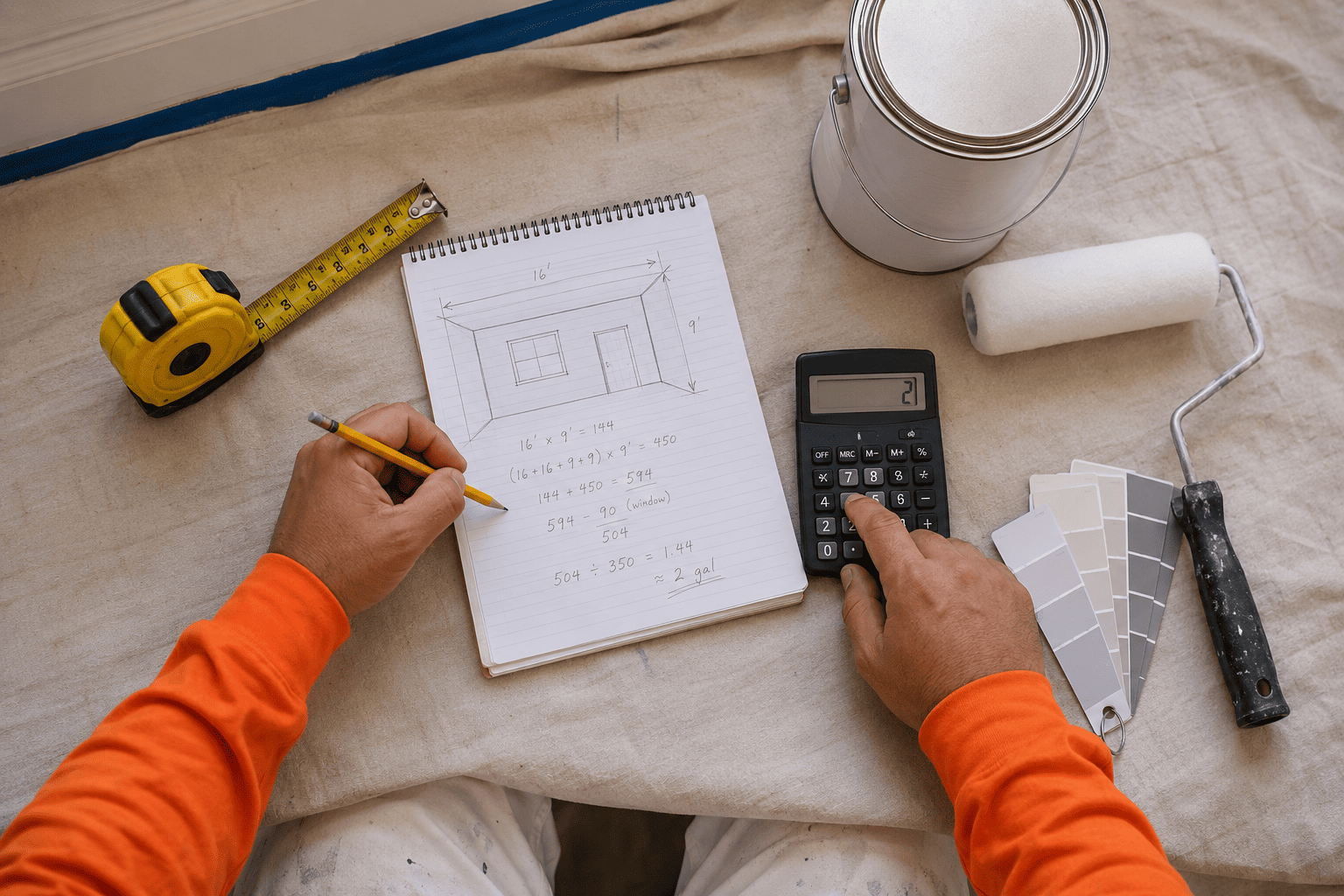
Knowing how much paint you need comes down to one habit. Measure first, then buy.
Most single rooms take one to two gallons for two coats, a quart handles accents and trim, and a 5-gallon bucket earns its keep on big jobs. Round up so you finish in one trip, and keep the leftover sealed for touch-ups.
If you want the full menu of what we handle, see our residential painting services.
Want the measuring and the buying off your plate entirely? Our team handles the math, the prep, and the coats so your walls come out right the first time.
Request a free estimate and we will give you a clear plan and an accurate paint count for your project.
The professional painting team at My Painter & Exteriors wrote and reviewed this guide. We serve Arlington, Fairfax, McLean, and the greater Northern Virginia area.
[Reviewer name, title, and years of hands-on painting experience to be confirmed before publishing.]
The coverage figures come from manufacturer guidance and current industry cost data, cited in the article above.