.jpg)

The best accent wall ideas start with one move. Paint the wall your eye already goes to, in a deep color pulled from something already in the room.
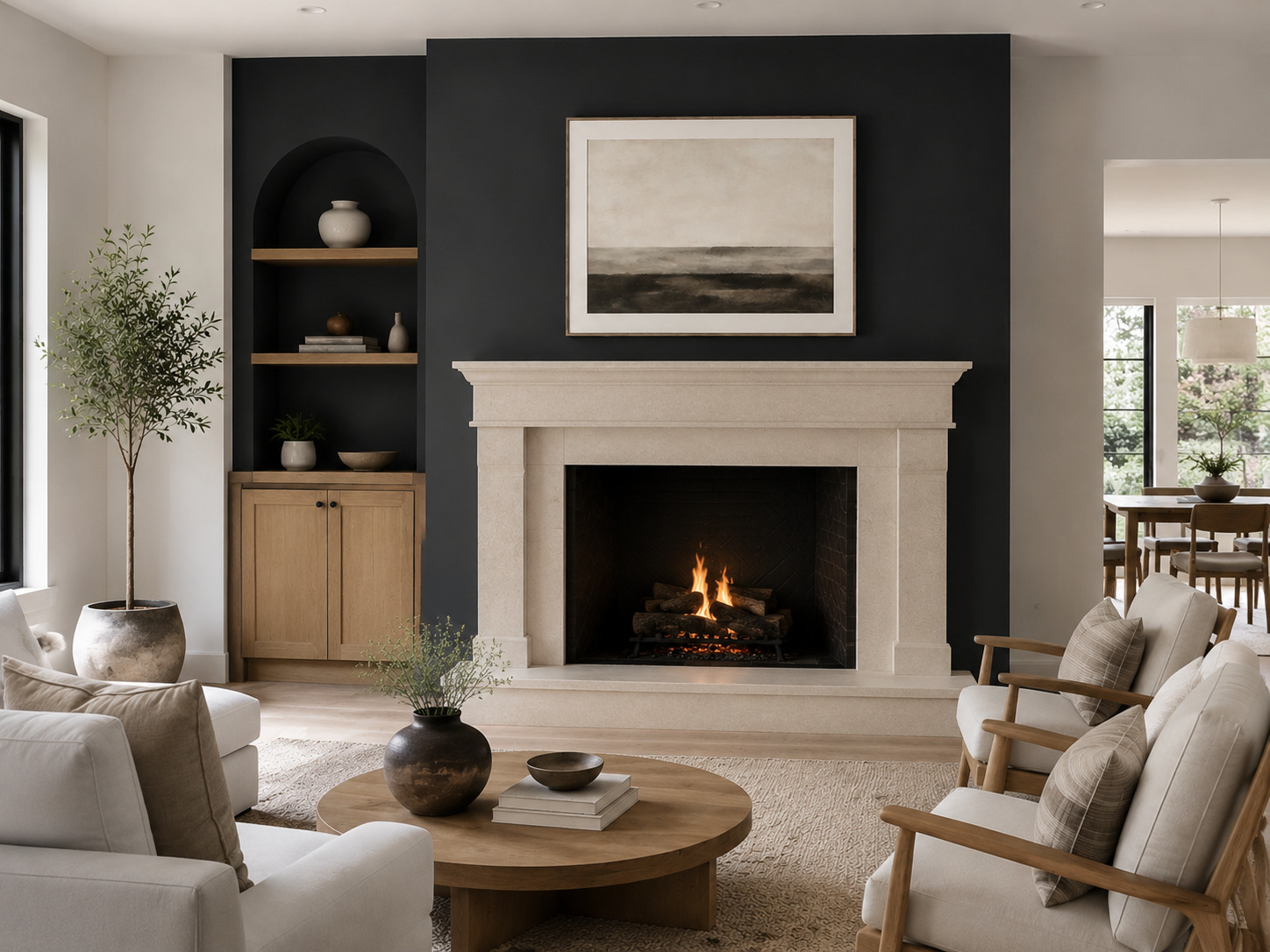
Navy, olive, terracotta, or charcoal behind a bed, sofa, or fireplace all work.
Get the wall and color right and the room looks pulled together. Get them wrong and it feels off balance.
Here are the rules that get it right.
● What is the rule for accent walls?
● Which wall should be an accent wall?
● What is the most popular accent wall color?
● What is trending for accent walls?
● Are accent walls out of style in 2026?
● How do you paint a clean accent wall?
Keep it to one accent wall per room, and make it the wall your eye already goes to first.
An accent works by pulling attention, so it has to back up a spot the room is already built around, not fight it. Put color on a wall that competes with an obvious focal point and you get two features fighting for your eye, with neither one winning.
Once you pick that wall, the rest of the room helps. Keep the other three walls lighter or more neutral so the accent stands out, and hold the finish steady or step it up one level of sheen at most.
Done right, the wall looks deliberate, like it belonged there from the start.
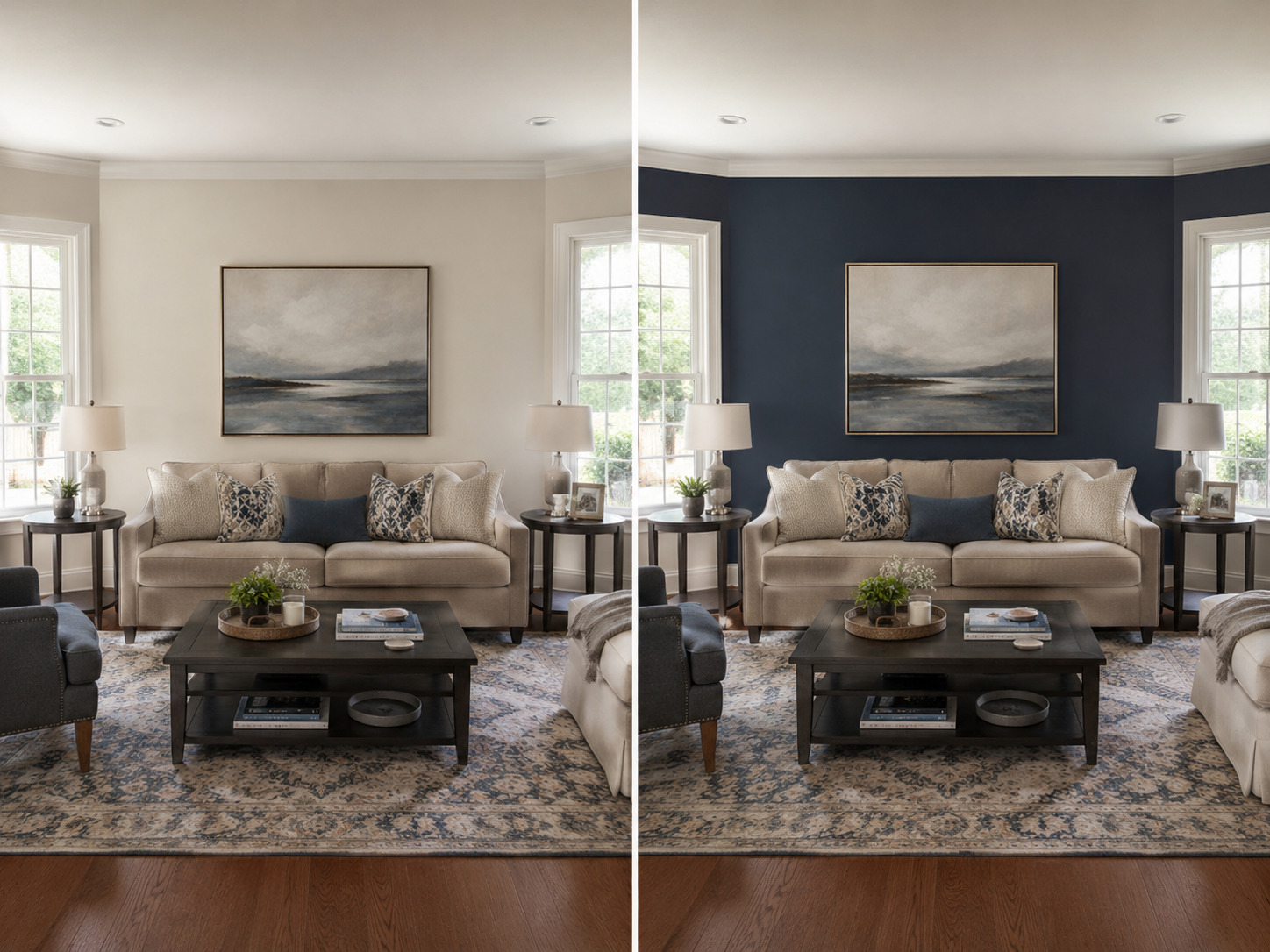
Pick the wall that anchors the room, usually the one you see walking in or the wall behind the largest piece of furniture. That is the simplest way to decide which wall to accent.
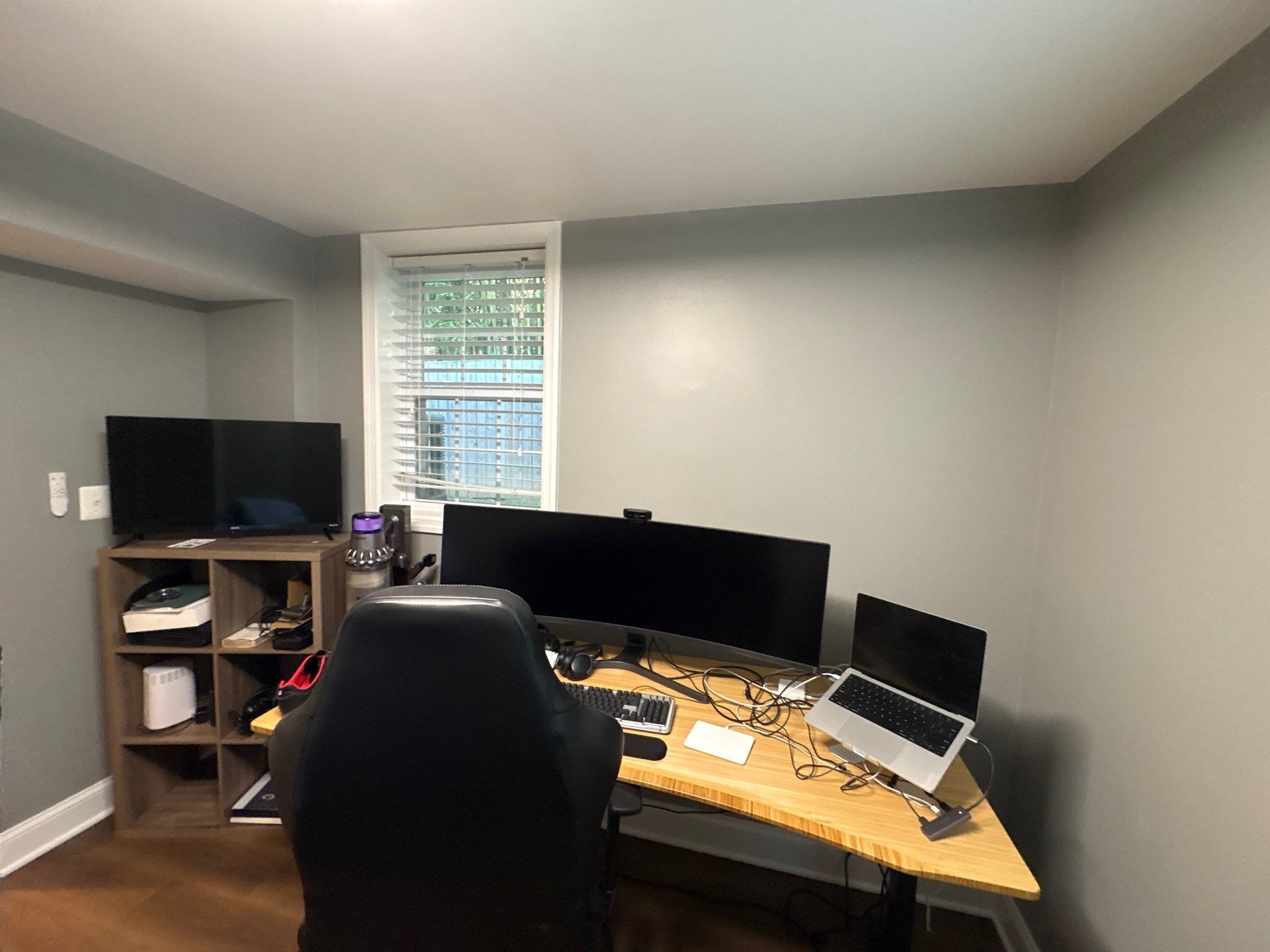
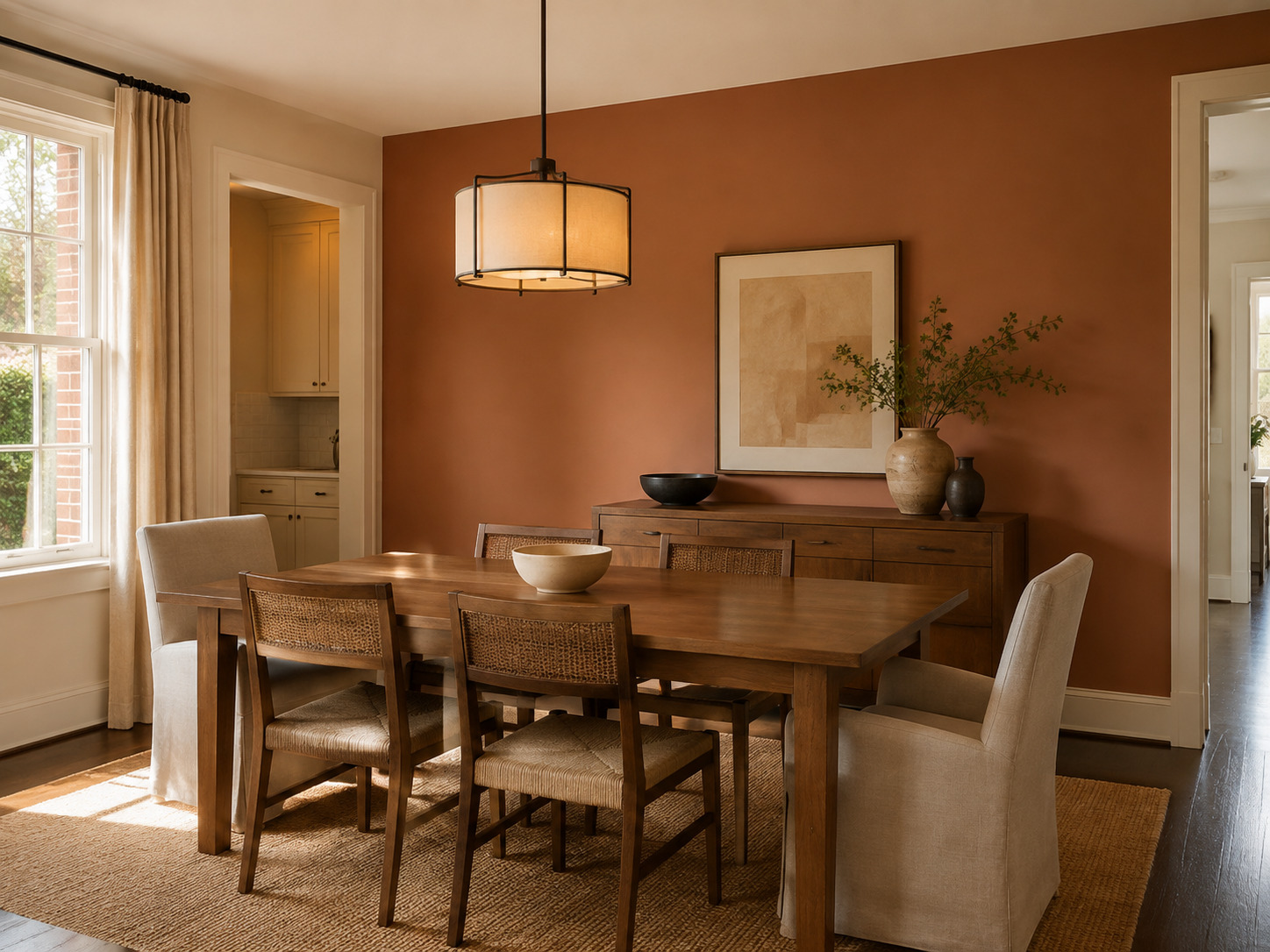
In a bedroom that is behind the headboard. In a living room it is behind the sofa or a fireplace wall. A dining room points to the wall the table sits against, a home office to the wall behind your desk on video calls.
Shape matters too. Solid, uninterrupted walls make the strongest accents because the color reads as one clean field.
A wall broken up by windows, doors, or vents is harder to pull off, since the color splits into pieces and loses its punch.
A window in the wall can still work, but plan the edges so the cut lines around the trim stay crisp.
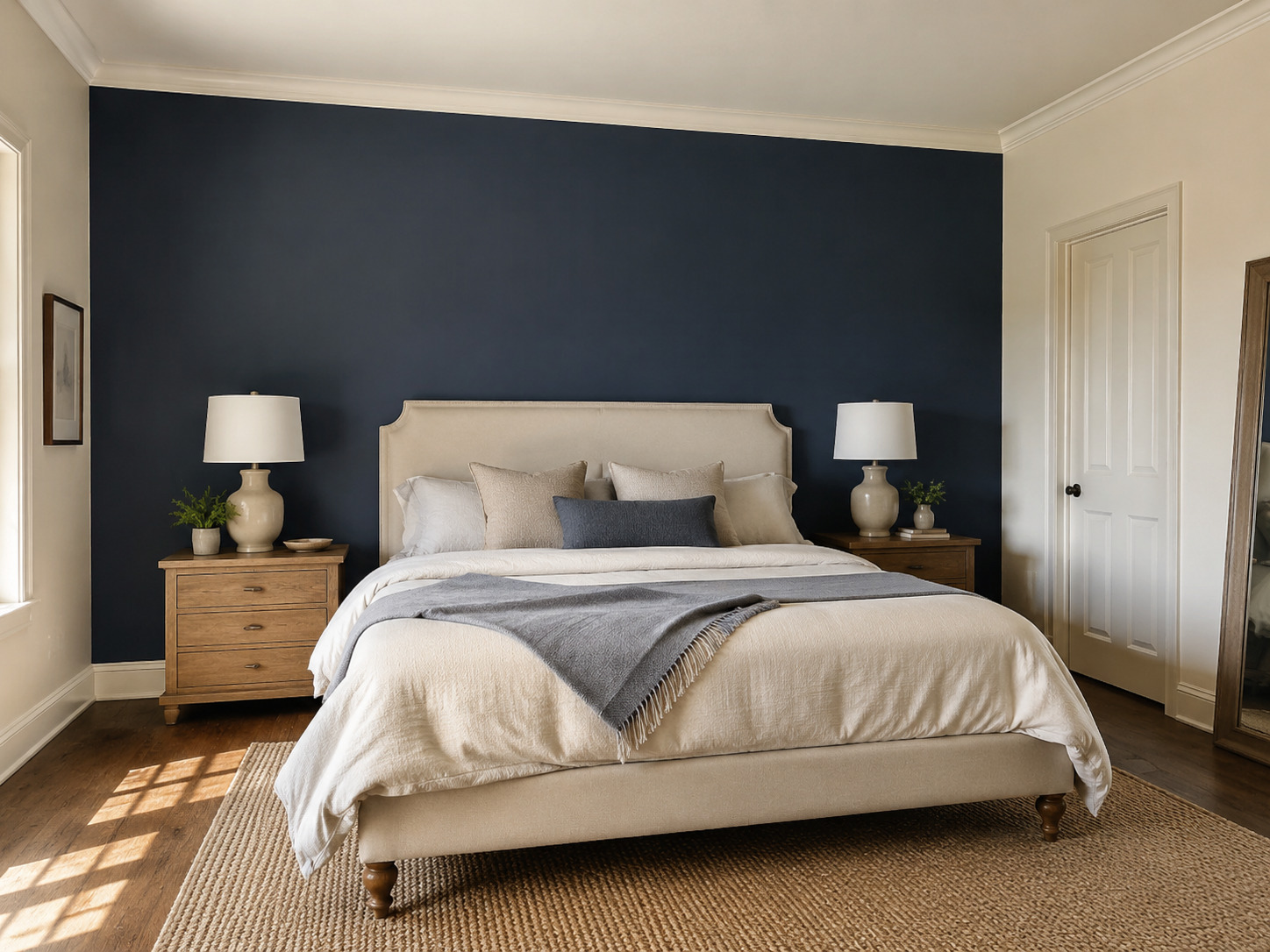
The most popular accent wall colors right now are deep, grounded tones, and each has a room where it works best.
Popular is not the same as right for your room. Picking a shade off a trend list is how accent walls end up dated.
Start with what you are not going to change, the flooring, tile, stone, countertops, and big furniture. Those are expensive to swap, and paint is the cheapest thing in the room, so let the permanent materials lead.
From there, find an undertone already in the room and go a few shades deeper. Warm oak floors suit a warm olive or clay. Cool gray tile and trim suit a navy or charcoal.
Local light matters here too. A lot of older homes across Northern Virginia get softer, cooler natural light, so a color that looks bold in the store can read muddy on the wall. Test your accent wall color in the actual room before you commit.
Matching the undertone makes the wall feel built-in, not bolted on.
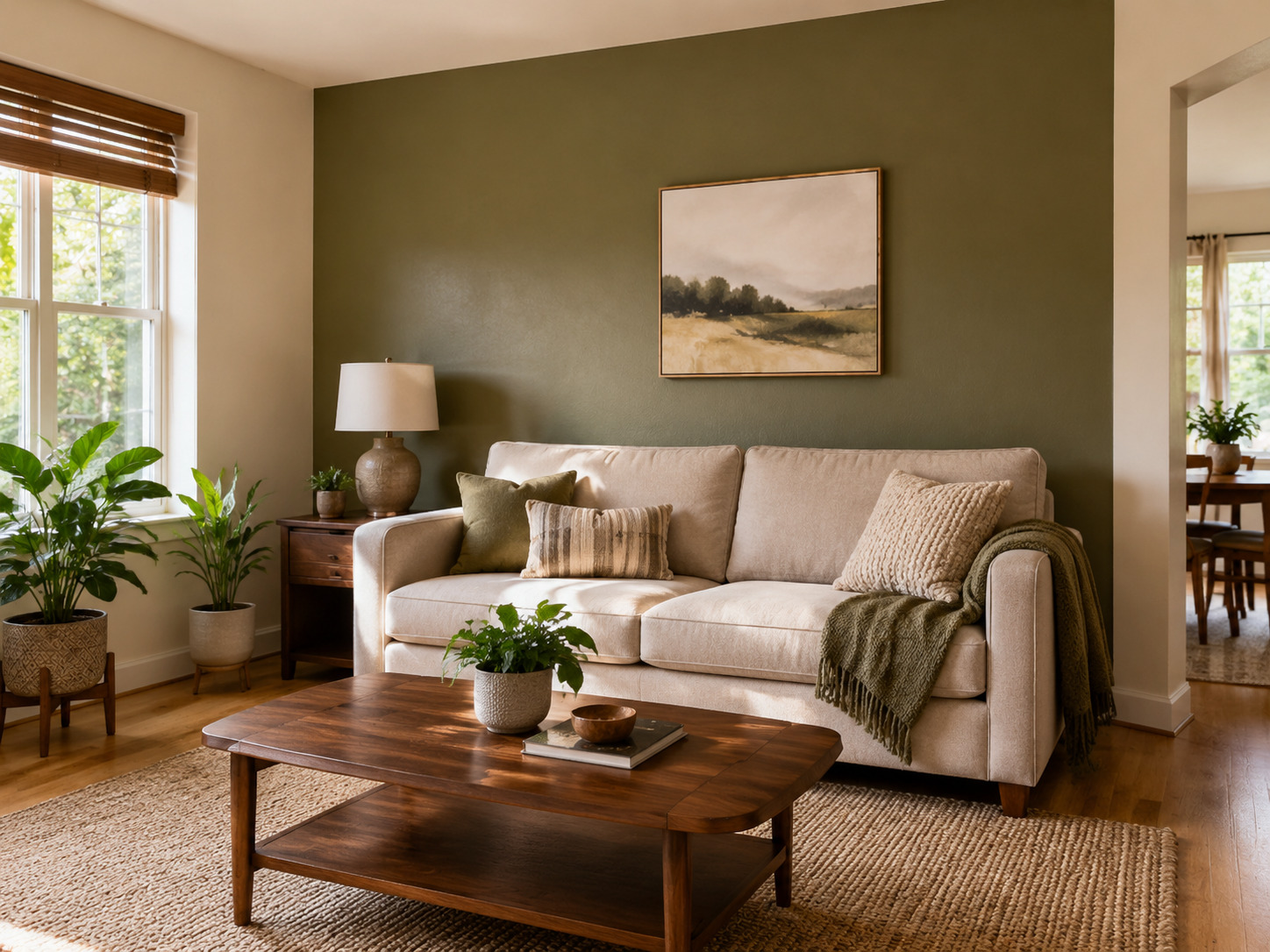
Whatever you pick, pull it from something in the room, a rug, art, or upholstery. Test it on the wall before you commit, since color shifts between daylight and lamplight.
Sheen changes the color too. A higher-gloss finish looks brighter and richer than the same color flat, and bounces more light.
Our color and sheen selection guide breaks down where each finish works best.
Trends are where accent walls go wrong. The walls that still look good in a few years did not chase one.
The current direction leans to texture and restraint over one loud color. Think wood slat panels, limewash, or picture-frame molding.
Worth knowing, but the trend that protects your money is being intentional, not any single look.
The clearest way to see it is what dates an accent wall against what keeps it current.
Want the current feel without the commitment? A warm earth tone in a matte or eggshell finish gets you most of the way there, and it is easy to change later.
No, accent walls are not out of style in 2026.
The approach changed, away from a random bright wall and toward accents that connect to the room through color, finish, and texture. The accent wall is not dead, but the careless version is.
A loud color with no tie to the furniture or the other walls dates fast. A wall chosen for its focal point, in a color pulled from the room, with the right finish, holds up for years.
If you might sell down the road, that same intentional choice pays off. Our guide on repainting your home before selling covers where neutral, buyer-friendly colors matter most.
So do not avoid accent walls. Be intentional, and the look lasts.
The finish comes down to prep and edges. Color gets the attention, but crisp lines make it look professional.
Here is the order that works.
1. Repair first. Fill nail holes, dents, and cracks, then sand smooth. A saturated color shows every flaw, so fix the wall before you paint. For real damage, professional drywall repair gives you a flat surface.
2. Clean and dry the wall so paint bonds well.
3. Cut in the edges at the ceiling, adjoining walls, and trim. This step makes or breaks the look, so use a good angled brush, or tape the edges and press them down firmly so paint cannot bleed under.
4. Prime if you are going light to dark or covering a stain. A tinted primer helps rich colors cover in fewer coats.
5. Roll the field in thin, even coats. Deep colors usually need two, so let each dry before the next.
6. Pull the tape while the last coat is still slightly wet for the cleanest line, then touch up in good light.
Deep colors are less forgiving than soft neutrals. If you want sharp lines and even color on the first try, a professional finish pays off.
A good accent wall should look like it belongs in the room, not like color was added just to fill an empty wall. The best accent wall ideas all follow that one rule.
Start with the natural focal point, then choose a color that connects to the flooring, furniture, art, or other finishes already in the space. Test the color in the room's actual lighting, keep the surrounding walls quieter, and make sure the surface is properly prepared before painting.
Get the wall, color, sheen, and prep working together, and the accent will feel intentional instead of trendy.
Deep colors punish sloppy prep and shaky edges. One thin patch, one bleed line under the tape, and the whole wall shows it.
That's the part homeowners across Arlington, Fairfax, and McLean hand to us. Our crew preps the wall, cuts clean lines, and lays the color even on the first pass.
Our interior house painting work covers the accent wall and the rest of the room.
Request a free estimate from My Painter & Exteriors and we'll talk through the wall and color you have in mind.